"A letter from Prague"
by Petr Doružka
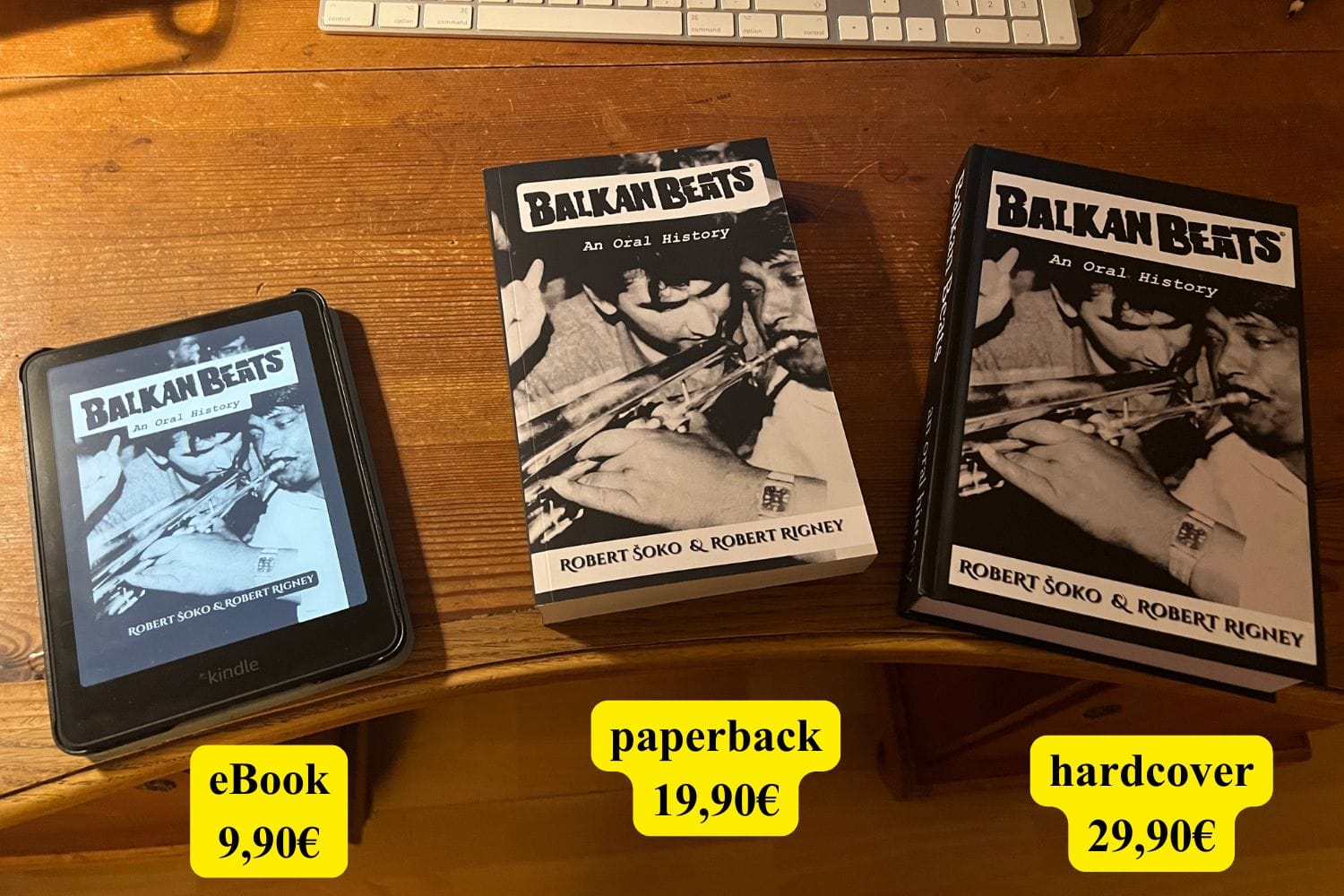
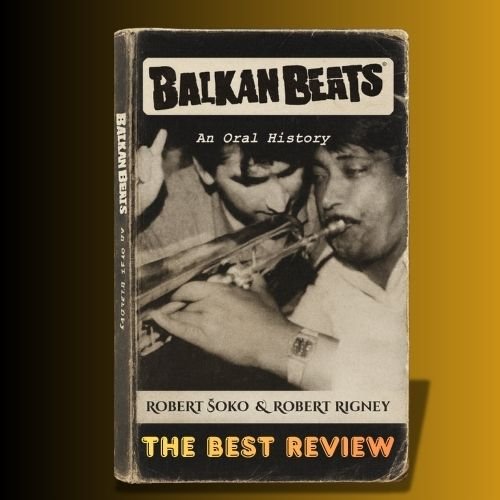
Balkan brass music, hitmaker Goran Bregović, musical nostalgia for Yugoslavia, the Roma music of Eastern Europe, the Serbian mega-festival Guča, Bosnian Sevdalinka ballads, and nationalist-tinged Turbofolk—all of these are tributaries of a multifaceted trend that has endured for more than 30 years. One of its starting points is considered to be the film Underground by director Emir Kusturica, inspired by the Yugoslav Wars. Even this brief enumeration suggests that it is more than a purely musical phenomenon, and that capturing it would require an entire team of knowledgeable authors. And that is precisely what this book represents—presented last year at the WOMEX trade fair. What remained personal, however, occurred behind the scenes and out of the spotlight. The parent organization of WOMEX is Piranha Arts AG, under whose umbrella the book’s publisher also operates. A bombastic conflict of interest would hardly have been a good idea.
The book does not offer a meticulously elaborated chronology, as implied by the subtitles “Oral History” and “This Is the True Story.” Both co-authors—the Bosnian-born DJ Robert Šoko and the American music journalist Robert Rigney—live in Berlin, alongside a large ex-Yugoslav diaspora. The book consists of 130 interviews, articles, and personal memoirs. Contributors to the quoted texts include university professors, internationally renowned journalists, and musicians from bands such as Dubioza Kolektiv, Gogol Bordello, Balkan Beat Box, Mr. Žarko, and Laibach. The result is a diverse yet engaging chain of observations, memories, and controversial opinions, from which the authors often succeed in creating surprising counterpoints. A particular focus is the confrontation between the ex-Yugoslav diaspora and the German mentality.
It is an extremely complex story encompassing both wartime destinies and the influence of ex-Yugoslav culture on the European—and especially the Berlin—diaspora. While nationalist cultural currents grew in the Yugoslav territories divided after the war, vibrant interactions flourished in Berlin’s nightclubs—both among themselves and with German audiences, for whom the music, temperament, and rakija of the Balkans possessed the allure of a paradisiacal, and therefore risky, fruit. Woven through this web of memoirs are private, often deeply intimate statements by both co-authors, in which romantic relationships are stubbornly intertwined with the resolution of immigration-related passport issues.
In the age of the internet, this is an ideal text for the fleeting reader. One can open the book on any page and immediately immerse oneself in the narrative. The authors state that they were inspired by the format of Please Kill Me: The Uncensored Oral History of Punk by Legs McNeil and Gillian McCain (1996), which was likewise compiled from archived interviews.
Yet punk is essentially our Western cultural homeland, whereas on the Balkans we find ourselves in a borderless terrain. The Montenegrin musician and provocateur known as Rambo Amadeus casually coined the term “Turbofolk,” which came to define the Serbian nationalist commercial scene—a concept akin to other styles that Rambo might just as elegantly subsume under the umbrella term “taxi-driver porn”: Tecnobrega from Brazil, Chalga from Bulgaria, Romanian Manele, or Indo-Pakistani Bhangra. In other words, as Rambo clarifies, it is the “incompetent use of technology.”
The book vividly portrays the confrontation between Balkan rhythms and audiences in Japan, New York, and South America. Co-author Robert Šoko compares: “What Mexico is to Americans, the Balkans are to Europeans. Mexicans are incredibly emotional. So are we. And sometimes dangerous as well. In Mexico, I almost feel at home.” He also specifies the risks of the DJ profession: “Alcohol is part of our job, but if you choose rakija, it knocks you out in no time. The solution is beer. The problem, however, is crossing the dance floor to reach the restroom. I always kept a plastic bottle under the DJ booth. With my other, free hand, I waved above my head to reassure the unsuspecting crowd that the party was going on.”
Among the book’s gems is Laibach’s response to the question of whether they influenced Rammstein: “Rammstein are Laibach for the masses, and Laibach are Rammstein for gourmets. Whether they borrowed a few ideas from us is not important—we also borrow from others. Only the Slovenes have always been better at playing Germans than the Germans themselves, whenever circumstances required it.”
Goran Bregović contributed an intriguing comparison: “Roma brass music is not just music. At least on an aesthetic level, it comes close to punk. Punk brings madness into music. The same is true of Roma brass bands. They don’t just play music—they generate madness. In the Balkans, it’s not enough merely to play music. There has to be a touch of madness. On one of my albums, I wrote the motto: If it doesn’t drive you mad, you’re not normal.”
original text