Goran Bregović (born 1950 in Sarajevo, Bosnia) is a recording artist from Bosnia and Herzegovina. He is one of the most internationally known modern musicians and composers of the Slavic-speaking countries in the Balkans, and is one of the few former Yugoslav musicians who has performed at major international venues such as Carnegie Hall, Royal Albert Hall and L’Olympia.
Source Wikipedia

“Talking to a wall” – an Interview with Goran Bregović
by Robert Rigney & Robert Šoko, Berlin 2023
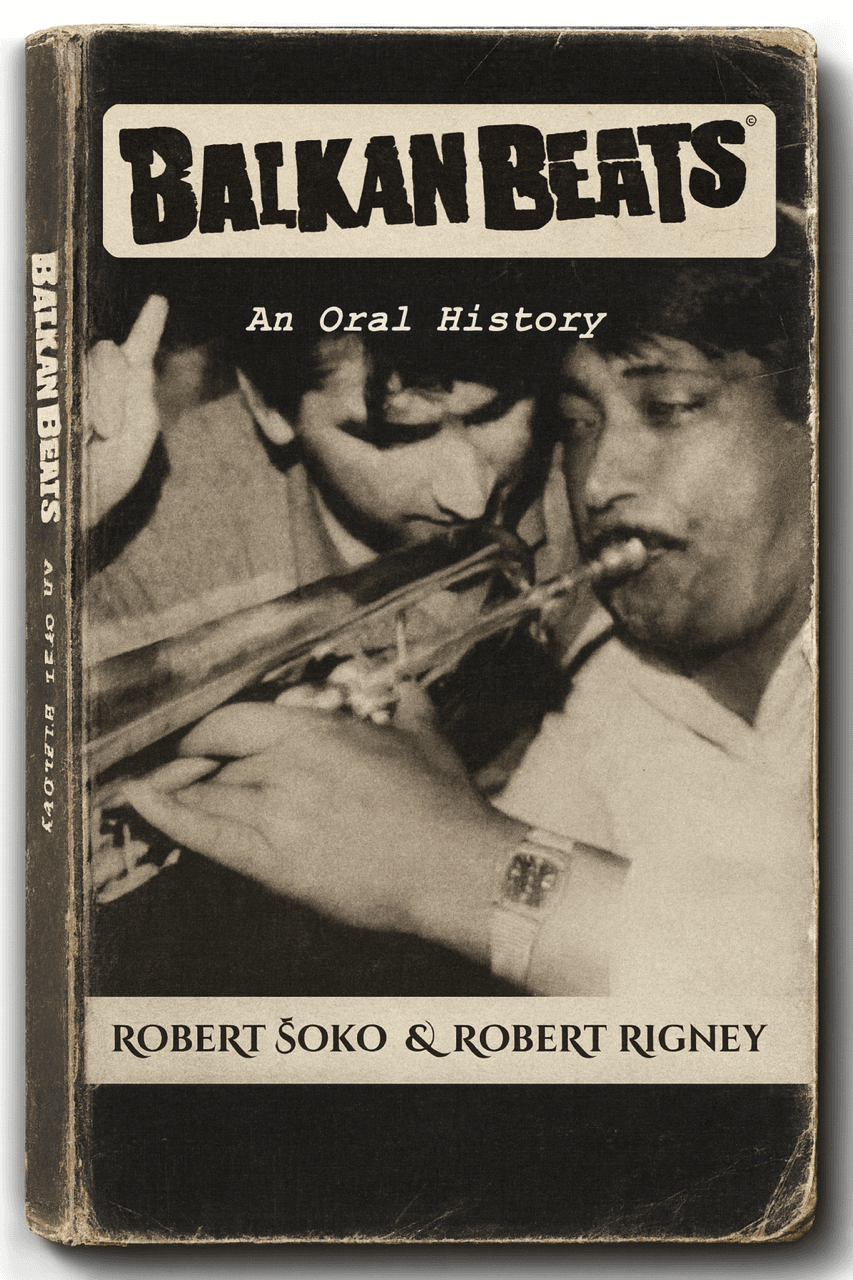
Balkan brass music, hitmaker Goran Bregović, musical nostalgia for Yugoslavia, the Roma music of Eastern Europe, the Serbian mega-festival Guča, Bosnian Sevdalinka ballads, and nationalist-tinged Turbofolk—all of these are tributaries of a multifaceted trend that has endured for more than 30 years. One of its starting points is considered to be the film Underground by director Emir Kusturica, inspired by the Yugoslav Wars. Even this brief enumeration suggests that it is more than a purely musical phenomenon, and that capturing it would require an entire team of knowledgeable authors. And that is precisely what this book represents—presented last year at the WOMEX trade fair. What remained personal, however, occurred behind the scenes and out of the spotlight. The parent organization of WOMEX is Piranha Arts AG, under whose umbrella the book’s publisher also operates. A bombastic conflict of interest would hardly have been a good idea. The book does not offer a meticulously elaborated chronology, as implied by the subtitles “Oral History” and “This Is the True Story.” Both co-authors—the Bosnian-born DJ Robert Šoko and the American music journalist Robert Rigney—live in Berlin, alongside a large ex-Yugoslav diaspora. The book consists of 130 interviews, articles, and personal memoirs. Contributors to the quoted texts include university professors, internationally renowned journalists, and musicians from bands such as Dubioza Kolektiv, Gogol Bordello, Balkan Beat Box, Mr. Žarko, and Laibach. The result is a diverse yet engaging chain of observations, memories, and controversial opinions, from which the authors often succeed in creating surprising counterpoints. A particular focus is the confrontation between the ex-Yugoslav diaspora and the German mentality. It is an extremely complex story encompassing both wartime destinies and the influence of ex-Yugoslav culture on the European—and especially the Berlin—diaspora. While nationalist cultural currents grew in the Yugoslav territories divided after the war, vibrant interactions flourished in Berlin’s nightclubs—both among themselves and with German audiences, for whom the music, temperament, and rakija of the Balkans possessed the allure of a paradisiacal, and therefore risky, fruit. Woven through this web of memoirs are private, often deeply intimate statements by both co-authors, in which romantic relationships are stubbornly intertwined with the resolution of immigration-related passport issues.
|